Integrative Multi-omics Approaches for Characterizing Antibiotic Resistance Mechanisms in Bacterial Pathogens: Challenges and Future Directions
DOI:
https://doi.org/10.65329/wjeb.v14.02.07Keywords:
Antimicrobial resistance (AMR), Global threat, Horizontal gene transfer, MBLs production, Metagenomics, Metallo- β-lactamases, Multi-omics integration, ResistomeAbstract
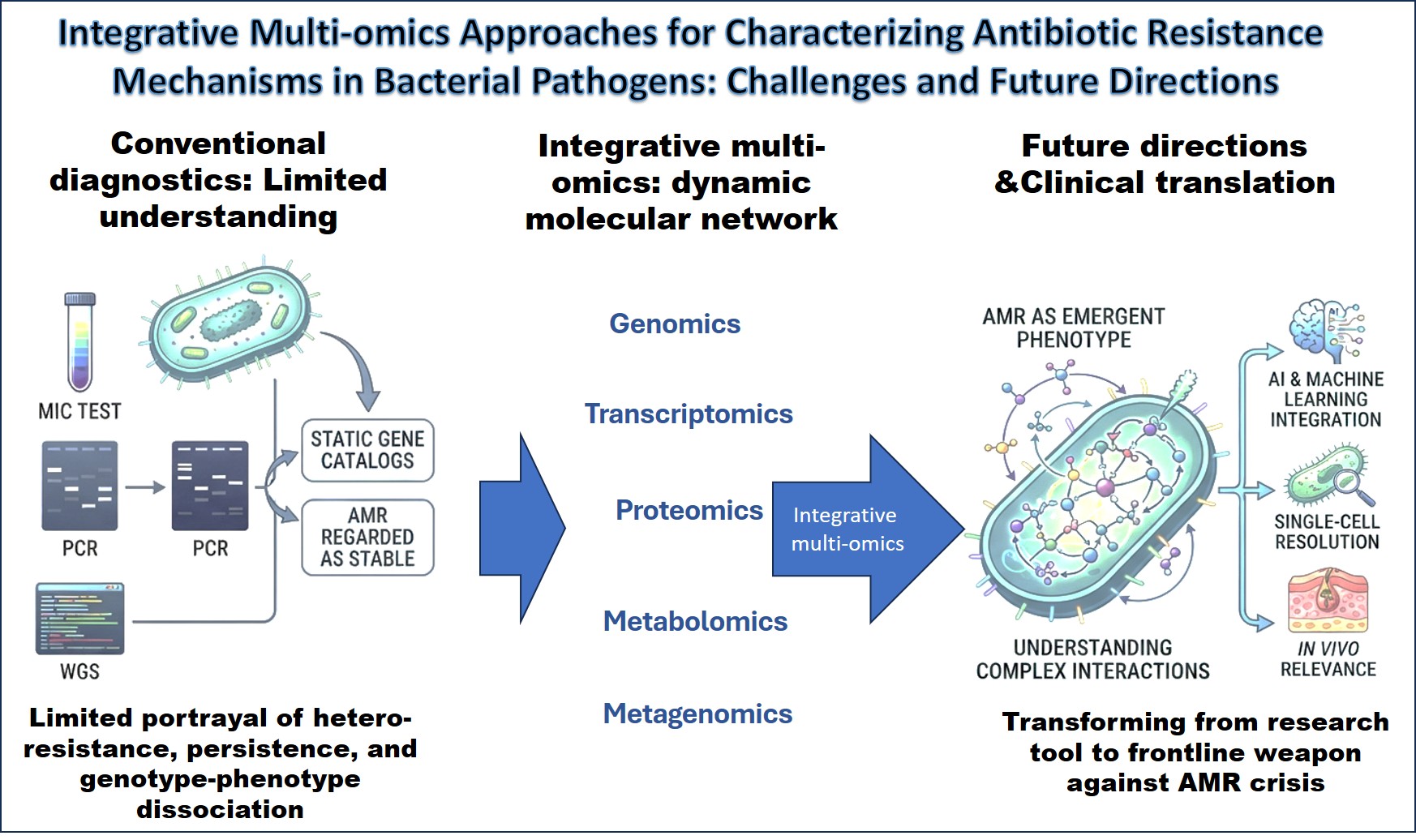
Antibiotic resistance (AMR) is no longer merely a genetic characteristic but a complex dynamic phenotype arising from interacting molecular networks. Conventional diagnostic methods such as minimum inhibitory concentration (MIC) test, PCR or even Whole-Genome Sequencing (WGS) have a limited understanding of resistance since they regard it as stable and unable to portray occurrence of phenomena like hetero-resistance, persistence and dissociation between genotype and phenotype. This review will highlight how integrative multi-omics (genomics, proteomics, metabolomics, transcriptomics, and metagenomics) is in a position to overcome these shortcomings by advancing the course of events starting from static gene catalogs to dynamic molecular networks. It also presents the idea of how integrative multi-omics can be employed to understand the mechanisms of antibiotic resistance in bacterial infections, with a focus on the existing issues and possible perspectives. This review derives from an elaborate literature analysis performed on online resources such as PubMed, Google Scholar, and Web of Science. This review highlights multi-omics approaches as suitable tools to counteract antibiotic resistance, illustrating the transition from static gene catalogs to dynamic molecular networks. Further, it addresses urgent issues in the field and considers possible advances in this context. The review establishes the rational system-based framework for the concept of antibiotic resistance as an emergent phenomenon of bacterial molecular networks. The work identifies critical bottlenecks in clinical translation and offers a clear roadmap, centered on AI integration, single-cell resolution, and in vivo relevance, for transforming multi-omics from a research tool into a frontline weapon against the AMR crisis.
Article History:
Received August 06, 2026
Revised November 05, 2026
Accepted: November 15, 2026
Published: November 21, 2026
Downloads
References
[1] Aswini R, Saranya B, Gayathri K, Karthikeyan E. (2025) Revolutionizing infectious disease surveillance: Multi-omics technologies and AI-driven integration. Decod Infect Transm 3:100061. doi: https://doi.org/10.1016/j.dcit.2025.100061.
[2] Subramanian I, Verma S, Kumar S, Jere A, Anamika K. (2020) Multi-omics data integration, interpretation, and its application. Bioinform Biol Insights 14:1177932219899051. doi: https://doi.org/10.1177/1177932219899051 PMCID: PMC7003173.
[3] Kula C, Erguven I, Ozcelik B, Gulfidan G, Arga KY. (2026) Transcriptome-Based Machine Learning Models to Predict Antimicrobial Resistance in Pseudomonas aeruginosa. Omics 30(2):94–104. doi: https://doi.org/10.1177/15578100251408284. PMID: 41468000.
[4] Hussein M, Creek DJ, Baker M, Rao G, Li J, Velkov T. (2025) Metabolomics-driven prediction of antibiotic resistance: A perspective on pre-genetic intervention. NPJ Antimicrob Resist 3(1):101. doi: https://doi.org/10.1038/s44259-025-00168-2. PMID: 41402626.
[5] Aldea AC, Diguță FC, Presacan O, Voaideș C, Toma RC, Matei F. (2025) Detecting antibiotic resistance: Classical, molecular, advanced bioengineering, and AI-enhanced approaches. Front Microbiol 16:1673343. doi: https://doi.org/10.3389/fmicb.2025.1673343. PMID: 41113632.
[6] Stasiak M, Maćkiw E, Kowalska J, Kucharek K, Postupolski J. (2021) Silent Genes: Antimicrobial Resistance and Antibiotic Production. Pol J Microbiol 70(4):421–429. doi: https://doi.org/10.33073/pjm-2021-040. PMID: 35003274.
[7] Spanka D-T, Konzer A, Edelmann D, Berghoff BA. (2019) High-throughput proteomics identifies proteins with importance to postantibiotic recovery in depolarized persister cells. Front Microbiol 10:378. doi: https://doi.org/10.3389/fmicb.2019.00378. PMID: 30894840.
[8] Raju NP, Dhanorkar M, Singh P. (2025) The interplay between antimicrobial resistance genes and emerging contaminants in wastewater treatment plants: Key players in One Health. Ann Microbiol 75(1):28. doi: https://doi.org/10.1186/s13213-025-01814-w.
[9] Piubeli F. (2022) Systems biology: New insight into antibiotic resistance. Microorganisms 10(12):2362. doi: https://doi.org/10.3390/microorganisms10122362. PMID: 36557614.
[10] Kok M, Maton L, van der Peet M, Hankemeier T, van Hasselt JGC. (2022) Unraveling antimicrobial resistance using metabolomics. Drug Discov Today 27(6):1774–1783. doi: https://doi.org/10.1016/j.drudis.2022.03.015. PMID: 35341988.
[11] Windels EM, Michiels JE, Fauvart M, Wenseleers T, Van den Bergh B, Michiels J. (2019) Bacterial persistence promotes the evolution of antibiotic resistance by increasing survival and mutation rates. ISME J 13(5):1239–1251. doi: https://doi.org/10.1038/s41396-019-0344-9. PMID: 30647458.
[12] Niu H, Gu J, Zhang Y. (2024) Bacterial persisters: Molecular mechanisms and therapeutic development. Signal Transduct Target Ther 9:174. doi: https://doi.org/10.1038/s41392-024-01866-5. PMID: 39013893.
[13] Balaban NQ, Helaine S, Lewis K, Ackermann M, Aldridge B, et al. (2019) Definitions and guidelines for research on antibiotic persistence. Nat Rev Microbiol 17(7):441–448. doi: https://doi.org/10.1038/s41579-019-0196-3. PMID: 30980069.
[14] Cross BJ, Partridge SR, Sheppard AE. (2026) Impacts of mobile genetic elements on antimicrobial resistance genes in Gram-negative pathogens: Current insights and genomic approaches. Microbiol Res 302:128340. doi: https://doi.org/10.1016/j.micres.2025.128340. PMID: 41005125.
[15] Partridge SR, Kwong SM, Firth N, Jensen SO. (2018) Mobile genetic elements associated with antimicrobial resistance. Clin Microbiol Rev 31(4):e00088-17. doi: https://doi.org/10.1128/CMR.00088-17. PMID: 30068738.
[16] Lerminiaux NA, Cameron ADS. (2019) Horizontal transfer of antibiotic resistance genes in clinical environments. Can J Microbiol 65(1):34–44. doi: https://doi.org/10.1139/cjm-2018-0275. PMID: 30248271.
[17] Wardal E, Markowska K, Zabicka D, Wróblewska M, Giemza M, et al. (2014) Molecular analysis of vanA outbreak of Enterococcus faecium in two Warsaw hospitals: the importance of mobile genetic elements. Biomed Res Int 2014:575367. doi: https://doi.org/10.1155/2014/575367. PMID: 25003118.
[18] Poirel L, Madec J-Y, Lupo A, Schink A-K, Kieffer N, et al. (2018) Antimicrobial resistance in Escherichia coli. Microbiol Spectr 6(4):ARBA-0026-2017. doi: https://doi.org/10.1128/microbiolspec.ARBA-0026-2017. PMID: 30003866.
[19] Hanrahan J, Hoyen C, Rice LB. (2000) Geographic distribution of a large mobile element that transfers ampicillin and vancomycin resistance between Enterococcus faecium strains. Antimicrob Agents Chemother 44(5):1349–1351. doi: https://doi.org/10.1128/AAC.44.5.1349-1351.2000. PMID: 10770775.
[20] Shintani M, Vestergaard G, Milaković M, Kublik S, Smalla K, et al. (2023) Integrons, transposons and IS elements promote diversification of multidrug resistance plasmids and adaptation of their hosts to antibiotic pollutants from pharmaceutical companies. Environ Microbiol 25(12):3035–3051. doi: https://doi.org/10.1111/1462-2920.16481. PMID: 37655671.
[21] Frost LS, Leplae R, Summers AO, Toussaint A. (2005) Mobile genetic elements: The agents of open source evolution. Nat Rev Microbiol 3(9):722–732. doi: https://doi.org/10.1038/nrmicro1235. PMID: 16138100.
[22] Tetu SG, Holmes AJ. (2008) A family of insertion sequences that impacts integrons by specific targeting of gene cassette recombination sites, the IS1111-attC group. J Bacteriol 190(14):4959–4970. doi: https://doi.org/10.1128/JB.00229-08. PMID: 18487340.
[23] Ali N, Ali I, Din AU, Akhtar K, He B, Wen R. (2024) Integrons in the Age of Antibiotic Resistance: Evolution, Mechanisms, and Environmental Implications: A Review. Microorganisms 12(12):2579. doi: https://doi.org/10.3390/microorganisms12122579. PMID: 39770781.
[24] Domingues S, da Silva GJ, Nielsen KM. (2012) Integrons: Vehicles and pathways for horizontal dissemination in bacteria. Mob Genet Elem 2(5):211–223. doi: https://doi.org/10.4161/mge.22967. PMID: 23550063.
[25] Han B, Feng C, Jiang Y, Ye C, Wei Y, et al. (2025) Mobile genetic elements encoding antibiotic resistance genes and virulence genes in Klebsiella pneumoniae: Important pathways for the acquisition of virulence and resistance. Front Microbiol 16:1529157. doi: https://doi.org/10.3389/fmicb.2025.1529157. PMID: 40066273.
[26] Johansson MHK, Petersen TN, Nag S, Lagermann TMR, Birkedahl LEK, et al. (2025) Investigation of mobile genetic elements and their association with antibiotic resistance genes in clinical pathogens worldwide. PLOS ONE 20(8):e0330304. doi: https://doi.org/10.1371/journal.pone.0330304. PMID: 40824964.
[27] Darby EM, Trampari E, Siasat P, Solsona Gaya M, Alav I, et al. (2023) Molecular mechanisms of antibiotic resistance revisited. Nat Rev Microbiol 21(5):280–295. doi: https://doi.org/10.1038/s41579-022-00820-y. PMID: 36411397.
[28] Baquero F, Coque TM, de la Cruz F. (2011) Ecology and evolution as targets: The need for novel eco-evo drugs and strategies to fight antibiotic resistance. Antimicrob Agents Chemother 55(8):3649–3660. doi: https://doi.org/10.1128/AAC.00013-11. PMID: 21576439.
[29] Wiegand I, Hilpert K, Hancock RE. (2008) Agar and broth dilution methods to determine the minimal inhibitory concentration (MIC) of antimicrobial substances. Nat Protoc 3(2):163–175. doi: https://doi.org/10.1038/nprot.2007.521. PMID: 18274517.
[30] Poole K. (2005) Efflux-mediated antimicrobial resistance. J Antimicrob Chemother 56(1):20–51. doi: https://doi.org/10.1093/jac/dki171. PMID: 15914491.
[31] Lewis K. (2010) Persister cells. Annu Rev Microbiol 64:357–372. doi: https://doi.org/10.1146/annurev.micro.112408.134306
PMID: 20528688.
[32] El-Halfawy OM, Valvano MA. (2015) Antimicrobial heteroresistance: An emerging field in need of clarity. Clin Microbiol Rev 28(1): 191–207. doi: https://doi.org/10.1128/CMR.00058-14. PMID: 25567227.
[33] Ellington MJ, Ekelund O, Aarestrup FM, Cantón R, Doumith M, et al. (2017) The role of whole genome sequencing in antimicrobial susceptibility testing of bacteria: Report from the EUCAST Subcommittee. Clin Microbiol Infect 23(1):2–22. doi: https://doi.org/10.1016/j.cmi.2016.11.012. PMID: 27890457.
[34] Kockum I, Huang J, Stridh P. (2023) Overview of genotyping technologies and methods. Current Protocols 3:e727. doi: https://doi.org/10.1002/cpz1.727. PMID: 37026777.
[35] Baquero F, Tedim AP, Coque TM. (2013) Antibiotic resistance shaping multi-level population biology of bacteria. Front Microbiol 4:15. doi: https://doi.org/10.3389/fmicb.2013.00015. PMID: 23508522.
[36] Haas R, Zelezniak A, Iacovacci J, Kamrad S, Townsend S, Ralser M. (2017) Designing and interpreting 'multi-omic' experiments that may change our understanding of biology. Curr Opin Syst Biol 6:37–45. doi: https://doi.org/10.1016/j.coisb.2017.08.009. PMID: 32923746.
[37] Khairnar M, Marda S. (2025) Integrative multi-omics in precision medicine: From molecular interconnectivity to single-cell resolution. Int J Sci Res Technol 2(7):162–186. doi: https://doi.org/10.5281/zenodo.15831126.
[38] Ho CS, Wong CTH, Aung TT, Lakshminarayanan R, Mehta JS, et al. (2025) Antimicrobial resistance: A concise update. Lancet Microbe 6(1):100947. doi: https://doi.org/10.1016/j.lanmic.2024.07.010. PMID: 39305919.
[39] Furuya EY, Lowy FD. (2006) Antimicrobial-resistant bacteria in the community setting. Nat Rev Microbiol 4(1):36–45. doi: https://doi.org/10.1038/nrmicro1325 PMID: 16357859.
[40] Nazir A, Nazir A, Zuhair V, Aman S, Sadiq SUR, et al. (2025) The global challenge of antimicrobial resistance: Mechanisms, case studies, and mitigation approaches. Health Sci Rep 8(7):e71077. doi: https://doi.org/10.1002/hsr2.71077 PMID: 40704322.
[41] Salam MA, Al-Amin MY, Pawar JS, Akhter N, Lucy IB. (2023) Conventional methods and future trends in antimicrobial susceptibility testing. Saudi J Biol Sci 30(3):103582. doi: https://doi.org/10.1016/j.sjbs.2023.103582. PMID: 36852413.
[42] Elbehiry A, Marzouk E, Abalkhail A, Abdelsalam MH, Mostafa MEA, et al. (2025) Detection of antimicrobial resistance via state-of-the-art technologies versus conventional methods. Front Microbiol 16:1549044. doi: https://doi.org/10.3389/fmicb.2025.1549044. PMID: 40071214.
[43] Zheng Y, Liu Y, Yang J, Dong L, Zhang R, et al. (2024) Multi-omics data integration using ratio-based quantitative profiling with Quartet reference materials. Nat Biotechnol 42(7):1133–1149. doi: https://doi.org/10.1038/s41587-023-01934-1. PMID: 37679543.
[44] Sanches PHG, de Melo NC, Porcari AM, de Carvalho LM. (2024) Integrating molecular perspectives: Strategies for comprehensive multi-omics integrative data analysis and machine learning applications in transcriptomics, proteomics, and metabolomics. Biology 13(11):848. doi: https://doi.org/10.3390/biology13110848. PMID: 39596803.
[45] Theuretzbacher U. (2025) The global resistance problem and the clinical antibacterial pipeline. Nat Rev Microbiol 23(8):491–508. doi: https://doi.org/10.1038/s41579-025-01169-8 PMID: 40210708.
[46] Koch CM, Chiu SF, Akbarpour M, Bharat A, Ridge KM, et al. (2018) A beginner’s guide to analysis of RNA sequencing data. Am J Respir Cell Mol Biol 59(2):145–157. doi: https://doi.org/10.1165/rcmb.2017-0430TR. PMID: 29624415.
[47] Hu Y, An Q, Sheu K, Trejo B, Fan S, Guo Y. (2018) Single cell multi-omics technology: Methodology and application. Front Cell Dev Biol 6:28. doi: https://doi.org/10.3389/fcell.2018.00028. PMID: 29732369.
[48] Aggarwal R, Mahajan P, Pandiya S, Bajaj A, Verma SK, et al. (2024) Antibiotic resistance: a global crisis, problems and solutions. Crit Rev Microbiol 50(5):896–921. doi: https://doi.org/10.1080/1040841X.2024.2313024. PMID: 38381581.
[49] GBD 2021 Antimicrobial Resistance Collaborators (2024). Global burden of bacterial antimicrobial resistance 1990-2021: a systematic analysis with forecasts to 2050. Lancet (London, England) 404(10459):1199–1226. doi: https://doi.org/10.1016/S0140-6736(24)01867-1 PMID: 39299261.
[50] Andersson DI, Hughes D. (2010) Antibiotic resistance and its cost: Is it possible to reverse resistance? Nat Rev Microbiol 8(4):260–271. doi: https://doi.org/10.1038/nrmicro2319 PMID: 20208551.
[51] Emara Y, Jolliet O, Finkbeiner M, Heß S, Kosnik M, et al. (2023) Comparative selective pressure potential of antibiotics in the environment. Environ Pollut 318:120873. doi: https://doi.org/10.1016/j.envpol.2022.120873 PMID: 36529346.
[52] Al-Fadhli AH, Jamal WY. (2024) Recent advances in gene-editing approaches for tackling antibiotic resistance threats: A review. Front Cell Infect Microbiol 14:1410115. doi: https://doi.org/10.3389/fcimb.2024.1410115. PMID: 38994001.
[53] Luo Y, Zhao C, Chen F. (2024) Multiomics research: Principles and challenges in integrated analysis. Biodes Res 6:0059. doi: https://doi.org/10.34133/bdr.0059. PMID: 39990095.
[54] Nogueira T. (2022) Genomic analysis of antibiotics resistance in pathogens [Editorial]. Antibiotics 11(8):1013. doi: https://doi.org/10.3390/antibiotics11081013. PMID: 36009882.
[55] Banerjee R, Patel R. (2023) Molecular diagnostics for genotypic detection of antibiotic resistance: current landscape and future directions. JAC Antimicrob Resist 5(1):dlad018. doi: https://doi.org/10.1093/jacamr/dlad018. PMID: 36816746.
[56] Boolchandani M, D’Souza AW, Dantas G. (2019) Sequencing-based methods and resources to study antimicrobial resistance. Nat Rev Genet 20(6):356–370. doi: https://doi.org/10.1038/s41576-019-0108-4. PMID: 30886350.
[57] Manzoor H, Li H, Kayani MUR. (2025) Identification of antibiotic resistance genes from whole genome and metagenome sequencing datasets. One Health Adv 3:14. doi: https://doi.org/10.1186/s44280-025-00079-x.
[58] Tam V, Patel N, Turcotte M, Bossé Y, Paré G, Meyre D. (2019) Benefits and limitations of genome-wide association studies. Nat Rev Genet 20(8):467–484. doi: https://doi.org/10.1038/s41576-019-0127-1 PMID: 31068683.
[59] Lappalainen T, Scott AJ, Brandt M, Hall IM. (2019) Genomic analysis in the age of human genome sequencing. Cell 177(1):70–84. doi: https://doi.org/10.1016/j.cell.2019.02.032. PMID: 30901550.
[60] Keskin Karakoyun H, Sayar C, Yararbaş K. (2023) Challenges in clinical interpretation of next-generation sequencing data: Advantages and pitfalls. Results Eng 20:101421. doi: https://doi.org/10.1016/j.rineng.2023.101421.
[61] Thorpe J, Sawaengdee W, Ward D, Campos M, Wichukchinda N, et al. (2024) Multi-platform whole genome sequencing for tuberculosis clinical and surveillance applications. Sci Rep 14(1):5201. doi: https://doi.org/10.1038/s41598-024-55865-1. PMID: 38431684.
[62] Andersson L. (2024) Integration of proteomics and genomics for personalized biomarker discovery in infectious diseases. J Mol Biomark Diagn 15(5):665. doi: https://doi.org/10.37421/2155-9929.2024.15.665.
[63] Baker KS, Jauneikaite E, Hopkins KL, Lo SW, Sánchez-Busó L, et al. (2023) Genomics for public health and international surveillance of antimicrobial resistance. Lancet Microbe 4(12):e1047–e1055. doi: https://doi.org/10.1016/S2666-5247(23)00283-5 PMID: 37977162.
[64] Pal C, Bengtsson-Palme J, Kristiansson E, Larsson DGJ. (2015) Co-occurrence of resistance genes to antibiotics, biocides and metals reveals novel insights into their co-selection potential. BMC Genomics 16:964. doi: https://doi.org/10.1186/s12864-015-2153-5. PMID: 26576951.
[65] Lim J, Park C, Kim M, Kim H, Kim J, Lee D-S. (2024) Advances in single-cell omics and multiomics for high-resolution molecular profiling. Exp Mol Med 56(3):515–526. doi: https://doi.org/10.1038/s12276-024-01186-2. PMID: 38443594.
[66] Cerofolini L, Fragai M, Ravera E, Diebolder CA, Renault L, Calderone V. (2019) Integrative approaches in structural biology: A more complete picture from the combination of individual techniques. Biomolecules 9(8):370. doi: https://doi.org/10.3390/biom9080370 PMID: 31416261.
[67] Probst K, Nurjadi D, Heeg K, Frede AM, Dalpke AH, Boutin S. (2021) Molecular Detection of Carbapenemases in Enterobacterales: A Comparison of Real-Time Multiplex PCR and Whole-Genome Sequencing. Antibiotics (Basel, Switzerland) 10(6):726. doi: https://doi.org/10.3390/antibiotics10060726. PMID: 34208657.
[68] Aita SE, Ristori MV, Cristiano A, Marfoli T, De Cesaris M, et al. (2025) Proteomic insights into bacterial responses to antibiotics: A narrative review. Int J Mol Sci 26(15):7255. doi: https://doi.org/10.3390/ijms26157255. PMID: 40806388.
[69] Sauerborn E, Corredor NC, Reska T, Perlas A, Vargas da Fonseca Atum S, et al. (2024) Detection of hidden antibiotic resistance through real-time genomics. Nat Commun 15(1):5494. doi: https://doi.org/10.1038/s41467-024-49851-4. PMID: 38944650.
[70] Ghenea AE, Zlatian OM, Cristea OM, Ungureanu A, Mititelu RR, et al. (2022) TEM, CTX-M, SHV genes in ESBL-producing Escherichia coli and Klebsiella pneumoniae isolated from clinical samples in a county clinical emergency hospital Romania: Predominance of CTX-M-15. Antibiotics 11(4):503. doi: https://doi.org/10.3390/antibiotics11040503. PMID: 35453254.
[71] Lawrence J, O’Hare D, van Batenburg-Sherwood J, Sutton M, Holmes A, Rawson TM. (2024). Innovative approaches in phenotypic beta-lactamase detection for personalised infection management. Nat Commun 15(1):9070. doi: https://doi.org/10.1038/s41467-024-53192-7. PMID: 39433753.
[72] Ratnikov BI, Cieplak P, Remacle AG, Nguyen E, Smith JW. (2021) Quantitative profiling of protease specificity. PLoS Comput Biol 17(2):e1008101. doi: https://doi.org/10.1371/journal.pcbi.1008101. PMID: 33617527.
[73] Soleimany AP, Martin-Alonso C, Anahtar M, Wang CS, Bhatia SN. (2022) Protease Activity Analysis: A Toolkit for Analyzing Enzyme Activity Data. ACS omega 7(28):24292–24301. doi: https://doi.org/10.1021/acsomega.2c01559. PMID: 35874224.
[74] Du D, Wang-Kan X, Neuberger A, van Veen HW, Pos KM, et al. (2018) Multidrug efflux pumps: Structure, function and regulation. Nat Rev Microbiol 16(9):523–539. doi: https://doi.org/10.1038/s41579-018-0048-6. PMID: 30002505.
[75] Horna G, López M, Guerra H, Saénz Y, Ruiz J. (2018) Interplay between MexAB-OprM and MexEF-OprN in clinical isolates of Pseudomonas aeruginosa. Sci Rep 8(1):16463. doi: https://doi.org/10.1038/s41598-018-34694-z. PMID: 30405166.
[76] Jamal Z, Gholami M, Ebrahimzadeh MA, Goli HR. (2023) The role of MexCD-OprJ and MexEF-OprN efflux systems in the multiple antibiotic resistance of Pseudomonas aeruginosa isolated from clinical samples. Curr Microbiol 80(7):221. doi: https://doi.org/10.1007/s00284-023-03330-z. PMID: 37210698.
[77] Foudraine DE, Strepis N, Stingl C, ten Kate MT, Verbon A, et al. (2021) Exploring antimicrobial resistance to beta-lactams, aminoglycosides and fluoroquinolones in E. coli and K. pneumoniae using proteogenomics. Sci Rep 11(1):12472. doi: https://doi.org/10.1038/s41598-021-91905-w. PMID: 34127720.
[78] Ayon NJ. (2025) Bacterial proteomics and antibiotic resistance identification: Is single-cell analysis a worthwhile pursuit? Pathogens 14(11):1127. doi: https://doi.org/10.3390/pathogens14111127. PMID: 41305364.
[79] Xu JY, Zhang C, Wang X, Zhai L, Ma Y, et al. (2020) Integrative Proteomic Characterization of Human Lung Adenocarcinoma. Cell, 182(1), 245–261.e17. doi: https://doi.org/10.1016/j.cell.2020.05.043. PMID: 32649877.
[80] Cao L, Huang C, Cui Zhou D, Hu Y, Lih TM, Savage SR, et al. (2021) Proteogenomic characterization of pancreatic ductal adenocarcinoma. Cell 184(19):5031–5052.e26. doi: https://doi.org/10.1016/j.cell.2021.08.023. PMID: 34534465.
[81] Kim SW, Lee JS, Park SB, Lee AR, Jung JW, et al. (2020) The importance of porins and β-lactamase in outer membrane vesicles on the hydrolysis of β-lactam antibiotics. Int J Mol Sci 21(8):2822. doi: https://doi.org/10.3390/ijms21082822. PMID: 32316670.
[82] Pagès J-M, Peslier S, Keating TA, Lavigne J-P, Nichols WW. (2016) Role of the outer membrane and porins in susceptibility of β-lactamase-producing Enterobacteriaceae to ceftazidime-avibactam. Antimicrob Agents Chemother 60(3):1349–1359. doi: https://doi.org/10.1128/AAC.01585-15. PMID: 26666933.
[83] Pira A, Scorciapino MA, Bodrenko IV, Bosin A, Acosta-Gutiérrez S, Ceccarelli M. (2020) Permeation of β-lactamase inhibitors through the general porins of Gram-negative bacteria. Molecules 25(23):5747. doi: https://doi.org/10.3390/molecules25235747
PMID: 33291474.
[84] James CE, Mahendran KR, Molitor A, Bolla J-M, Bessonov AN, et al. (2009) How β-lactam antibiotics enter bacteria: A dialogue with the porins. PLoS One 4(5):e5453. doi: https://doi.org/10.1371/journal.pone.0005453. PMID: 19434239.
[85] Wainwright J, Hobbs G, Nakouti I. (2021) Persister cells: formation, resuscitation and combative therapies. Arch Microbiol 203(10), 5899–5906. doi: https://doi.org/10.1007/s00203-021-02585-z. PMID: 34739553.
[86] Yang QE, Ma X, Li M, Zhao M, Zeng L, et al. (2024) Evolution of triclosan resistance modulates bacterial permissiveness to multidrug resistance plasmids and phages. Nat Commun 15(1):3654. doi: https://doi.org/10.1038/s41467-024-48006-9. PMID: 38688912.
[87] Tzec-Interián JA, González-Padilla D, Góngora-Castillo EB. (2025) Bioinformatics perspectives on transcriptomics: A comprehensive review of bulk and single-cell RNA sequencing analyses. Quant Biol 13(2):e78. doi: https://doi.org/10.1002/qub2.78. PMID: 41675508.
[88] Monzó C, Liu T, Conesa A. (2025) Transcriptomics in the era of long-read sequencing. Nat Rev Genet 26(10):681–701. doi: https://doi.org/10.1038/s41576-025-00828-z. PMID: 40155769.
[89] Chen S, Wang P, Guo H, Zhang Y. (2024) Deciphering gene expression patterns using large-scale transcriptomic data and its applications. Brief Bioinform 25(6):bbae590. doi: https://doi.org/10.1093/bib/bbae590. PMID: 39541191.
[90] Dong Z, Chen Y. (2013) Transcriptomics: Advances and approaches. Sci China Life Sci 56(10):960–967. doi: https://doi.org/10.1007/s11427-013-4557-2. PMID: 24091688.
[91] Domínguez Á, Muñoz E, López MC, Cordero M, Martínez JP, Viñas M. (2017) Transcriptomics as a tool to discover new antibacterial targets. Biotechnol Lett 39(6):819–828. doi: https://doi.org/10.1007/s10529-017-2319-0. PMID: 28289911.
[92] Wang Y, Luo H, Wang H, Xiang Z, Wei S, Zheng W. (2022) Comparative transcriptome analysis of rice cultivars resistant and susceptible to Rhizoctonia solani AG1-IA. BMC Genomics 23(1):606. doi: https://doi.org/10.1186/s12864-022-08816-x. PMID: 35986248.
[93] Cao Z, Banniza S. (2024) Gene co-expression analysis reveals conserved and distinct gene networks between resistant and susceptible Lens ervoides challenged by hemibiotrophic and necrotrophic pathogens. Sci Rep 14(1):24967. doi: https://doi.org/10.1038/s41598-024-76316-x. PMID: 39443543.
[94] Kim SH, Arora I, Hsia DS, Knowler WC, LeBlanc E, et al. (2023) New-onset diabetes after COVID-19. J Clin Endocrinol Metab 108(11):e1164–e1174. doi: https://doi.org/10.1210/clinem/dgad284. PMID: 37207448.
[95] Jian Z, Zeng L, Xu T, Sun S, Yan S, et al. (2021) Antibiotic resistance genes in bacteria: Occurrence, spread, and control. J Basic Microbiol 61(12):1049–1070. doi: https://doi.org/10.1002/jobm.202100201. PMID: 34651331.
[96] Marku M, Pancaldi V. (2023) From time-series transcriptomics to gene regulatory networks: A review on inference methods. PLoS Comput Biol 19(8):e1011254. doi: https://doi.org/10.1371/journal.pcbi.1011254. PMID: 37561790.
[97] Malinowska JM, Whelan M. (2025) The important role of standards for the uptake of transcriptomics and metabolomics based in vitro methods in regulatory toxicology. Arch Toxicol 99(10):3865–3875. doi: https://doi.org/10.1007/s00204-025-04119-8. PMID: 40739409.
[98] Rajput A, Tsunemoto H, Sastry AV, Szubin R, Rychel K, et al. (2022) Advanced transcriptomic analysis reveals the role of efflux pumps and media composition in antibiotic responses of Pseudomonas aeruginosa. Nucleic Acids Res 50(17):9675–9688. doi: https://doi.org/10.1093/nar/gkac743. PMID: 36095122.
[99] Grace A, Sahu R, Owen DR, Dennis VA. (2022) Pseudomonas aeruginosa reference strains PAO1 and PA14: A genomic, phenotypic, and therapeutic review. Front Microbiol 13:1023523. doi: https://doi.org/10.3389/fmicb.2022.1023523. PMID: 36312971.
[100] Castanheira M, Doyle TB, Hubler CM, Collingsworth TD, DeVries S, Mendes RE. (2022) The plethora of resistance mechanisms in Pseudomonas aeruginosa: transcriptome analysis reveals a potential role of lipopolysaccharide pathway proteins to novel β-lactam/β-lactamase inhibitor combinations. J Glob Antimicrob Resist 31:72–79. doi: https://doi.org/10.1016/j.jgar.2022.07.021. PMID: 35931381.
[101] Clish CB. (2015) Metabolomics: an emerging but powerful tool for precision medicine. Cold Spring Harb Mol Case Stud 1(1):a000588. doi: https://doi.org/10.1101/mcs.a000588. PMID: 27148576.
[102] Wishart DS. (2019) Metabolomics for investigating physiological and pathophysiological processes. Physiological Reviews 99(4):1819–1875. doi: https://doi.org/10.1152/physrev.00035.2018. PMID: 31434538.
[103] Gallart-Ayala H, Teav T, Ivanisevic J. (2020) Metabolomics meets lipidomics: Assessing the small molecule component of metabolism. BioEssays 42(12):e2000052. doi: https://doi.org/10.1002/bies.202000052. PMID: 33230910.
[104] Chen H, Kong J, Du P, Wang Q, Jiang T, et al. (2025) Functional metabolomics: Unlocking the role of small molecular metabolites. Front Mol Biosc 12:1542100. doi: https://doi.org/10.3389/fmolb.2025.1542100. PMID: 40703706.
[105] Elbediwi M, Rolff J. (2024) Metabolic pathways and antimicrobial peptide resistance in bacteria. J Antimicrob Chemother 79(7):1473–1483. doi: https://doi.org/10.1093/jac/dkae128. PMID: 38742645.
[106] Kuang S-F, Xiang J, Li S-H, Su Y-B, Chen Z-G, et al. (2025) Metabolic reprogramming enhances the susceptibility of multidrug- and carbapenem-resistant bacteria to antibiotics. Nat Microbiol 10(9):2257–2274. doi: https://doi.org/10.1038/s41564-025-02083-8.
PMID: 40790107.
[107] Acierno C, Barletta F, Nevola R, Rinaldi L, Sasso FC, et al. (2025) Metabolic Rewiring of Bacterial Pathogens in Response to Antibiotic Pressure-A Molecular Perspective. Int J Mol Sci 26(12):5574. doi: https://doi.org/10.3390/ijms26125574. PMID: 40565037.
[108] Ling Z-N, Jiang Y-F, Ru J-N, Lu J-H, Ding B, Wu J. (2023) Amino acid metabolism in health and disease. Signal Transduct Target Ther 8: 345. doi: https://doi.org/10.1038/s41392-023-01569-3. PMID: 37699892.
[109] Chuphal N, Malik MA, Kishore PS, Mohanta KN. (2025). Amino acids as functional nutrients in stress mitigation of aquatic species: mechanisms and applications in aquaculture. Blue Biotechnol 2:20 (2025). doi: https://doi.org/10.1186/s44315-025-00040-y
[110] Hou Z, Tuo J, Ma X, Huo Y-X. (2025) Recent advances in biosynthesis of non-canonical amino acids and their potentials in strain engineering. Results Eng 25:103641. doi: https://doi.org/10.1016/j.rineng.2024.103641.
[111] Gaurav A, Bakht P, Saini M, Pandey S, Pathania R. (2023) Role of bacterial efflux pumps in antibiotic resistance, virulence, and strategies to discover novel efflux pump inhibitors. Microbiol 169(5):001333. doi: https://doi.org/10.1099/mic.0.001333. PMID: 37224055.
[112] Torrens G, Cava F. (2024) Mechanisms conferring bacterial cell wall variability and adaptivity. Biochem Soc Trans 52(5):1981–1993. doi: https://doi.org/10.1042/BST20230027. PMID: 39324635.
[113] García-Heredia A. (2023) Plasma membrane–cell wall feedback in bacteria. J Bacteriol 205(3):e00433-22. doi: https://doi.org/10.1128/jb.00433-22. PMID: 36794934.
[114] Zhao M, Ma J, Li M, Zhang Y, Jiang B, et al. (2021) Cytochrome P450 enzymes and drug metabolism in humans. Int J Mol Sci 22(23):12808. doi: https://doi.org/10.3390/ijms222312808. PMID: 34884615.
[115] Zhang L, Chen F, Zeng Z, Xu M, Sun F, et al. (2021) Advances in metagenomics and its application in environmental microorganisms. Front Microbiol 12: 766364. doi: https://doi.org/10.3389/fmicb.2021.766364. PMID: 34975791.
[116] Olsen NS, Riber L. (2025) Metagenomics as a transformative tool for antibiotic resistance surveillance: Highlighting the impact of mobile genetic elements with a focus on the complex role of phages. Antibiotics 14(3):296. doi: https://doi.org/10.3390/antibiotics14030296. PMID: 40149106.
[117] de Abreu VAC, Perdigão J, Almeida S. (2021) Metagenomic approaches to analyze antimicrobial resistance: An overview. Front Genet 11:575592. doi: https://doi.org/10.3389/fgene.2020.575592. PMID: 33537056.
[118] Lanza VF, Baquero F, Martínez JL, Ramos-Ruíz R, González-Zorn B, et al. (2018) In-depth resistome analysis by targeted metagenomics. Microbiome 6(1):11. doi: https://doi.org/10.1186/s40168-017-0387-y. PMID: 29335005.
[119] Nass NM, Zaher KA. (2025) Beyond the Resistome: Molecular Insights, Emerging Therapies, and Environmental Drivers of Antibiotic Resistance. Antibiotics (Basel, Switzerland) 14(10):995. doi: https://doi.org/10.3390/antibiotics14100995. PMID: 41148687
[120] Maan K, Baghel R, Dhariwal S, Sharma A, Bakhshi R, Rana P. (2023) Metabolomics and transcriptomics based multi-omics integration reveals radiation-induced altered pathway networking and underlying mechanism. NPJ Syst Biol Appl 9(1):42. doi: https://doi.org/10.1038/s41540-023-00305-5. PMID: 37689794.
[121] Aguiar-Pulido V, Huang W, Suarez-Ulloa V, Cickovski T, Mathee K, Narasimhan G. (2016) Metagenomics, Metatranscriptomics, and Metabolomics Approaches for Microbiome Analysis. Evol Bioinform Online 12(Suppl 1):5–16. doi: https://doi.org/10.4137/EBO.S36436. PMID: 27199545
[122] Liu S, Rodriguez JS, Munteanu V, Ronkowski C, Sharma NK, et al. (2025) Analysis of metagenomic data. Nat Rev Methods Primers 5:5. doi: https://doi.org/10.1038/s43586-024-00376-6. PMID: 40688383.
[123] Ota Y, Chen F, Prah I, Mahazu S, Watanabe K, et al. (2024) Metatranscriptomic Analysis Reveals Actively Expressed Antimicrobial-Resistant Genes and Their Hosts in Hospital Wastewater. Antibiotics (Basel, Switzerland) 13(12):1122. doi: https://doi.org/10.3390/antibiotics13121122. PMID: 39766512.
[124] Ma J, Kim N, Cha JH, Kim W, Kim CY, et al. (2026) A human gut metagenome-assembled genome catalogue spanning 41 countries supports genome-scale metabolic models. Nat Microbiol 11(1):317–334. doi: https://doi.org/10.1038/s41564-025-02206-1. PMID: 41345261.
[125] Sajib MSI, Oravcova K, Brunker K, Everest P, Galarion MJH, et al. (2025) MultiSeq-AMR: a modular amplicon-sequencing workflow for rapid detection of bloodstream infection and antimicrobial resistance markers. Microb Genom 11(4):001383. doi: https://doi.org/10.1099/mgen.0.001383. PMID: 40178523.
[126] Bird E, Pickens V, Molik D, Silver K, Nayduch D. (2025) BALROG-MON: a high-throughput pipeline for Bacterial AntimicrobiaL Resistance annotation of Genomes-Metagenomic Oxford Nanopore. MicroPubl Biol 2025:10.17912/micropub.biology.001427. doi: https://doi.org/10.17912/micropub.biology.001427. PMID: 40046038.
[127] Lan F, Saba J, Ross TD, Zhou Z, Krauska K, et al. (2024) Massively parallel single-cell sequencing of diverse microbial populations. Nat Methods 21(2):228–235. doi: https://doi.org/10.1038/s41592-023-02157-7. PMID: 38233503.
[128] Andreadi A, Tsivelekidou E, Dermitzakis I, Theotokis P, Gargani S, et al. (2025) Innovations in MALDI-TOF Mass Spectrometry: Bridging modern diagnostics and historical insights. Open Life Sci 20(1):20251136. doi: https://doi.org/10.1515/biol-2025-1136. PMID: 40688408.
[129] Florio W, Baldeschi L, Rizzato C, Tavanti A, Ghelardi E, Lupetti A. (2020) Detection of Antibiotic-Resistance by MALDI-TOF Mass Spectrometry: An Expanding Area. Front Cell Infect Microbiol 10:572909. doi: https://doi.org/10.3389/fcimb.2020.572909. PMID: 33262954.
[130] Dixon B, Ahmed WM, Fowler SJ, Felton T, Trivedi DK. (2025) LC-MS/MS metabolomics unravels the resistant phenotype of carbapenemase-producing Enterobacterales. Metabolomics 21(5):115. doi: https://doi.org/10.1007/s11306-025-02300-9. PMID: 40794220
[131] Janiszewska D, Szultka-Młyńska M, Pomastowski P, Buszewski B. (2022) "Omic" Approaches to Bacteria and Antibiotic Resistance Identification. Int J Mol Sci 23(17):9601. doi: https://doi.org/10.3390/ijms23179601. PMID: 36077000.
[132] Olsen NS, Riber L. (2025) Metagenomics as a Transformative Tool for Antibiotic Resistance Surveillance: Highlighting the Impact of Mobile Genetic Elements with a Focus on the Complex Role of Phages. Antibiotics (Basel, Switzerland) 14(3):296. doi: https://doi.org/10.3390/antibiotics14030296. PMID: 40149106.
[133] Gao Q, Wu H, Duan L, Lv G, Quan D. (2025) Multi-omics analysis of the tumor microenvironment after metastasis: advancing toward personalized immunotherapy and molecular targeted strategies. Front Immunol 16:1648987. doi: https://doi.org/10.3389/fimmu.2025.1648987. PMID: 41064001.
[134] Molla G, Bitew M. (2024). Revolutionizing personalized medicine: Synergy with multi-omics data generation, main hurdles, and future perspectives. Biomedicines 12(12):2750. doi: https://doi.org/10.3390/biomedicines12122750. PMID: 39767657.
[135] Pirouzbakht M, Hamzeh S, Soleimani H. (2025) Beyond single biomarkers: Multi-omics strategies to predict immunotherapy outcomes in blood cancers. Clin Exp Med 25(1):355. doi: https://doi.org/10.1007/s10238-025-01902-w. PMID: 41193778.
[136] Uyar B, Savchyn T, Naghsh Nilchi A, Sarigun A, Wurmus R, et al. (2025) Flexynesis: A deep learning toolkit for bulk multi-omics data integration for precision oncology and beyond. Nat Commun 16:8261. doi: https://doi.org/10.1038/s41467-025-63688-5. PMID: 40940333.
[137] Potter G, Beierle JA, Bryant C, Phanse S, White C, et al. (2026) OmNI: A modular open-source framework for interactive multi-omics data integration and visualization. NAR Genom Bioinform 8(1):lqaf206. doi: https://doi.org/10.1093/nargab/lqaf206. PMID: 41524030.
[138] Bilbao A. (2025) The future of a myriad of accelerated biodiscoveries lies in AI-powered mass spectrometry and multiomics integration. J Mass Spectrom 60(8):e5157. doi: https://doi.org/10.1002/jms.5157. PMID: 40616377.
[139] Shaw RK, Shen Y, Wang J, Sheng X, Zhao Z, et al. (2021) Advances in Multi-Omics Approaches for Molecular Breeding of Black Rot Resistance in Brassica oleracea L. Front Plant Sci 12:742553. doi: https://doi.org/10.3389/fpls.2021.742553. PMID: 34938304.
[140] Rehm HL, Bale SJ, Bayrak-Toydemir P, Berg JS, Brown KK, et al. (2013) ACMG clinical laboratory standards for next-generation sequencing. Genet Med 15(9):733–747. doi: https://doi.org/10.1038/gim.2013.92. PMID: 23887774.
[141] Yamin D, Uskoković V, Wakil AM, Goni MD, Shamsuddin SH, et al. (2023) Current and future technologies for the detection of antibiotic-resistant bacteria. Diagnostics 13(20):3246. doi: https://doi.org/10.3390/diagnostics13203246. PMID: 37892067.
[142] Liu J, Yang L, Liu D, Wu Q, Yu Y, et al. (2025) The role of multi-omics in biomarker discovery, diagnosis, prognosis, and therapeutic monitoring of tissue repair and regeneration processes. J Orthop Transl 54:131–151. doi: https://doi.org/10.1016/j.jot.2025.07.006. PMID: 40822515.
[143] Oldoni E, Saunders G, Bietrix F, Garcia Bermejo ML, Niehues A, et al. (2022) Tackling the translational challenges of multi-omics research in the realm of European personalised medicine: A workshop report. Front Mol Biosci 9:974799. doi: https://doi.org/10.3389/fmolb.2022.974799. PMID: 36310597.
[144] Jiang J, Xia N, Yang M, Qiu P, Zhu W, et al. (2025) Identification and validation of glucose metabolism-related gene signature in endometrial cancer. BMC Cancer 25:30. doi: https://doi.org/10.1186/s12885-024-13418-9. PMID: 39773448.
[145] Mukherjee A, Abraham S, Singh A, Balaji S, Mukunthan KS. (2025) From Data to Cure: A Comprehensive Exploration of Multi-omics Data Analysis for Targeted Therapies. Mol Biotechnol 67(4):1269–1289. doi: 10.1007/s12033-024-01133-6. PMID: 38565775.
[146] De Oliveira DMP, Forde BM, Kidd TJ, Harris PNA, Schembri MA, et al. (2020) Antimicrobial resistance in ESKAPE pathogens. Clin Microbiol Rev 33(3):e00181-19. doi: https://doi.org/10.1128/CMR.00181-19. PMID: 32404435
[147] Athieniti E, Spyrou GM. (2023) A guide to multi-omics data collection and integration for translational medicine. Comput Struct Biotechnol J 21:134–149. doi: https://doi.org/10.1016/j.csbj.2022.11.050. PMID: 36544480
[148] Ugwu CN, Ezeibe EN, Emencheta SC, Nwagwu CS, Ogbonna KO, et al. (2025) Biofilms: Structure, resistance mechanism, emerging control strategies, and applications. RSC Pharmaceutics 2(6):1376–1407. doi: https://doi.org/10.1039/D5PM00094G.
[149] Hendriksen RS, Bortolaia V, Tate H, Tyson GH, Aarestrup FM, McDermott PF. (2019) Using genomics to track global antimicrobial resistance. Front Public Health 7:242. doi: https://doi.org/10.3389/fpubh.2019.00242. PMID: 31552211.
[150] Joshi S, Bidgoli AI, Joshi A. (2025) Navigating ethical challenges of multi-omics and electronic health records in healthcare. Health Sci Inq 14:34–38. doi: https://doi.org/10.29173/hsi497.
[151] Alemu R, Sharew NT, Arsano YY, Ahmed M, Tekola-Ayele F, et al. (2025) Multi-omics approaches for understanding gene-environment interactions in noncommunicable diseases: techniques, translation, and equity issues. Hum Genomics 19(1):8. doi: https://doi.org/10.1186/s40246-025-00718-9. PMID: 39891174.
[152] Babu M, Snyder M. (2023) Multi-omics profiling for health. Mol Cell Proteomics 22(6):100561. doi: https://doi.org/10.1016/j.mcpro.2023.100561. PMID: 37119971.
[153] Vitorino R. (2024) Transforming clinical research: The power of high-throughput omics integration. Proteomes 12(3):25. doi: https://doi.org/10.3390/proteomes12030025. PMID: 39311198.
[154] Kant S, Roy S. (2025) Integrative multi-omics and artificial intelligence: A new paradigm for systems biology. OMICS 29(12):576–587. doi: https://doi.org/10.1177/15578100251392371. PMID: 41203247.
[155] Ferreira RBR, Antunes LCM, Sal-Man N. (2025) Pathogen-pathogen interactions during co-infections. ISME J 19(1):wraf104. doi: https://doi.org/10.1093/ismejo/wraf104. PMID: 40407166.
[156] Okamoto J, Yin X, Ryan B, Chiou J, Luca F, et al. (2025) Multi-INTACT: Integrative analysis of the genome, transcriptome, and proteome identifies causal mechanisms of complex traits. Genome Biol 26:19. doi: https://doi.org/10.1186/s13059-025-03480-2. PMID: 39901160.
[157] Liu P, An B, Zheng J, Wang Q, Yang Z, et al. (2026) Integrative Omics Defines Metabolic Biomarkers and Genetic Regulatory Mechanisms of Mortality Risk. Adv Sci (Weinh)13(3):e14464. doi: https://doi.org/10.1002/advs.202514464. PMID: 41250990.
[158] Duan X-P, Qin B-D, Jiao X-D, Liu K, Wang Z, Zang Y-S. (2024) New clinical trial design in precision medicine: Discovery, development and direction. Signal Transduct Target Ther 9:57. doi: https://doi.org/10.1038/s41392-024-01760-0. PMID: 38438349.
[159] Jiang W, Ye W, Tan X, Bao Y-J. (2025) Network-based multi-omics integrative analysis methods in drug discovery: A systematic review. BioData Mining, 18(1). doi: https://doi.org/10.1186/s13040-025-00442-z.
[160] Catalano A, Iacopetta D, Ceramella J, Scumaci D, Giuzio F, et al. (2022) Multidrug resistance (MDR): A widespread phenomenon in pharmacological therapies. Molecules 27(3):616. doi: https://doi.org/10.3390/molecules27030616. PMID: 35163878.
[161] Picard M, Scott-boyer M pier, Bodein A, Périn O, Droit A. (2021) Integration strategies of multi-omics data for machine learning analysis. Comput Struct Biotechnol J 19:3735–47. doi: https://doi.org/10.1016/j.csbj.2021.06.030. PMID: 34285775.
[162] Cheng F, Kovács IA, Barabási A-L. (2019) Network-based prediction of drug combinations. Nat Commun 10:1197. doi: https://doi.org/10.1038/s41467-019-09186-x. PMID: 30867426.
[163] Gao P, Chen Z, Wang D, Huang M, Ono N, et al. (2021) An integrated multi-omics approach for AMR phenotype prediction of gut microbiota. In Proceedings of the 2021 IEEE International Conference on Bioinformatics and Biomedicine (BIBM) (pp. 2211–2216). IEEE. doi: https://doi.org/10.1109/BIBM52615.2021.9669397.
[164] Krishnaprasad VH, Nayak V, Kumar S. (2025) World Health Organisation's Bacterial Pathogen Priority List (BPPL) 2017 and BPPL 2024 to combat global antimicrobial resistance crisis: 'challenges and opportunities'. J Antimicrob Chemother 80(8):2061–2069. doi: https://doi.org/10.1093/jac/dkaf167. PMID: 40424180.
[165] MacNair CR, Tsai CN, Rutherford ST, Tan M-W. (2023) Returning to nature for the next generation of antimicrobial therapeutics. Antibiotics, 12(8):1267. doi: https://doi.org/10.3390/antibiotics12081267. PMID: 37627687 .
Additional Files
Published
Issue
Section
License
Copyright (c) 2026 Shiferaw Bekele Woyesa, Nathlee Abbai, Tesfaye Kassa, Gemeda Abebe (Author)

This work is licensed under a Creative Commons Attribution 4.0 International License.
All articles in the World Journal of Experimental Biosciences are published under the terms of the Creative Commons Attribution 4.0 International License (CC BY 4.0) ( (http://creativecommons.org/licenses/by/4.0/), which permits unrestricted use, distribution, and reproduction in any medium, provided the original work is properly cited.